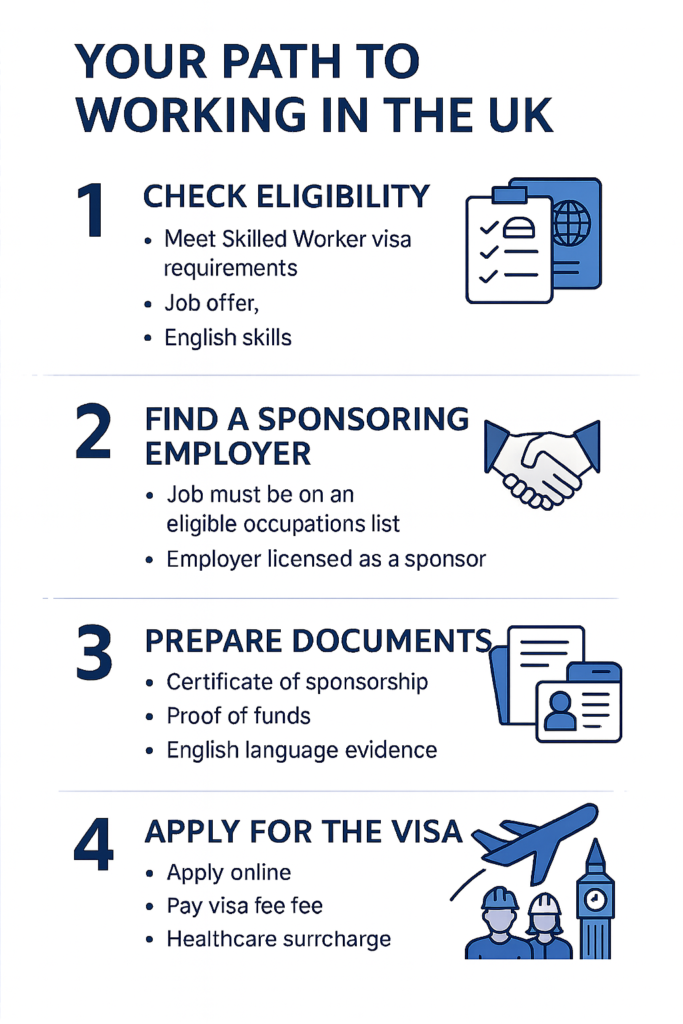
Studying in the United Kingdom can be expensive, especially for international students who must pay tuition fees, accommodation, transportation, food, and other living expenses. However, Get Paid $70,000 to Study in the UK: Fully Funded Scholarships for International Students is a topic worth exploring because several prestigious scholarship programmes provide substantial financial support to qualified students from around the world.
The important thing to understand is that you do not necessarily receive $70,000 in cash. Instead, a fully funded scholarship may cover your university tuition, provide a monthly living allowance, pay for international flights, and cover other approved study-related expenses. When these benefits are added together over the full duration of a degree, the total value can reach tens of thousands of pounds and, in some cases, exceed $70,000.
In this guide, you will discover UK scholarships worth considering for the 2027 and subsequent academic years, including Chevening, Commonwealth Scholarships, the Clarendon Fund at Oxford, and the Rhodes Scholarship. You will also learn who can apply, which documents to prepare, how to submit an application, and where to find official application links.
The goal is to help you identify legitimate funding opportunities and avoid misleading scholarship advertisements.
What Does It Mean to Get Paid $70,000 to Study in the UK?
Getting paid to study in the UK generally means receiving a scholarship or studentship that provides financial assistance while you pursue an eligible academic programme. Rather than paying all your educational expenses yourself, the scholarship sponsor covers specified costs and may provide a stipend for your daily living expenses.
A fully funded scholarship is an award that covers the major approved costs of studying, usually including tuition fees and living expenses. Depending on the programme, it may also cover return flights, visa fees, health-related immigration charges, research expenses, or family allowances.
The phrase “$70,000 scholarship” can refer to the estimated combined value of these benefits, converted into US dollars. It does not automatically mean that the university or sponsor will transfer $70,000 directly into your bank account.
For example, a hypothetical scholarship could provide:
- Tuition fees worth £25,000.
- Living expenses worth £18,000 over the award period.
- International flights and other approved allowances worth £1,500.
The combined support would be worth £44,500, although the student would not receive the entire amount as unrestricted cash.
Actual scholarship values depend on the university, course, location, award duration, and the sponsor’s current funding terms. Therefore, always check the official scholarship website before relying on a headline amount.
Get Paid $70,000 to Study in the UK: Which Scholarships Should You Consider?
Several UK scholarship programmes are open to eligible international students. The most suitable option depends on your nationality, academic qualifications, work experience, intended degree, and career goals.
The following programmes are good starting points for students seeking substantial funding.
1. Chevening Scholarships for International Students
Official programme: UK Government-funded postgraduate scholarships
The Chevening Scholarship is one of the best-known options for international students who want to pursue a one-year master’s degree in the United Kingdom.
The programme supports outstanding individuals who demonstrate leadership potential, professional experience, and a clear vision for contributing to their communities or countries.
According to the official Chevening website, the standard scholarship includes tuition fees, an approved return economy flight, a monthly living allowance, and certain additional allowances. Visa application costs and other specified expenses are also covered under the programme’s terms.
What does Chevening cover?
- Tuition fees for an eligible master’s degree, subject to the programme’s conditions.
- A monthly stipend for accommodation, food, and everyday expenses.
- Approved return international travel.
- Arrival and departure allowances.
- Visa application fees and certain other approved expenses.
- Opportunities to network with professionals, leaders, and other scholars.
Who can apply?
Applicants must meet the citizenship, academic, work experience, course selection, and other eligibility requirements for their country and award. Chevening generally requires at least 2,800 hours of eligible work experience, equivalent to two years of work. The applicable rules should be checked carefully before applying.
The scholarship is particularly relevant to professionals interested in public policy, business, education, development, technology, health, and other fields offered by eligible UK universities.
How to apply: Visit the official Chevening application portal, select your country of citizenship, and check whether applications are open.
For the 2027–2028 study cycle, do not assume that every country’s application window remains open. The official country-specific portal provides the current status.
2. Commonwealth Master’s Scholarships
The Commonwealth Master’s Scholarships are designed to help eligible students from Commonwealth countries obtain a master’s degree in the UK.
These awards focus on talented candidates who may not otherwise be able to afford postgraduate education and whose studies can contribute to development in their home countries.
Nigeria is a Commonwealth member, making this programme particularly relevant to Nigerian applicants who meet the specific eligibility conditions.
What does the scholarship cover?
Depending on the award terms, Commonwealth Master’s Scholarships provide:
- Approved university tuition fees.
- An approved return flight between the scholar’s home country and the UK.
- A monthly living allowance.
- A study travel grant for eligible academic travel.
- Certain additional allowances for eligible scholars who meet the relevant conditions.
The Commonwealth Scholarship Commission publishes the benefits and selection criteria for its programmes.
Who is eligible?
For the relevant master’s scheme, candidates generally need to be citizens or eligible residents of an approved Commonwealth country, hold an appropriate undergraduate qualification, and demonstrate that they meet the programme’s financial and academic criteria.
Selection is not based solely on grades. The commission also considers the proposed study, development impact, and the applicant’s potential to use the qualification constructively.
How to apply: Visit the official Commonwealth Master’s Scholarships website.
The 2027–2028 application round is open, with the published closing date of 20 October 2026 at 16:00 BST. Applicants must use the official application system and should check any separate requirements or deadlines set by their nominating agency.
3. Oxford University Clarendon Scholarships
The Clarendon Fund provides fully funded scholarships to academically outstanding graduate students at the University of Oxford.
It is worth considering if you have strong academic results and want to pursue a master’s degree or doctoral programme at one of the UK’s leading universities.
Unlike some awards that are restricted to selected nationalities, Clarendon has no nationality or ordinary-residence restrictions. Eligible candidates from Nigeria and other countries can be considered.
What does Clarendon cover?
- Full course fees for the covered period.
- A living-expenses grant for eligible full-time scholars.
- Funding for the applicable period of fee liability, subject to the award’s terms.
For the 2025–2026 academic year, Oxford published a minimum annual living-expenses grant of £20,780 for full-time Clarendon scholars. This is a historical reference point, not a guarantee of the amount payable in 2026–2027 or later years. Check Oxford’s latest published rate when preparing your budget.
Who can apply?
Applicants must apply for an eligible new master’s or DPhil programme at Oxford and meet the university’s admission requirements. Academic merit and potential are central to selection.
How to apply: Visit the official Clarendon Scholarship page.
There is no separate Clarendon scholarship application form. You must submit your Oxford graduate course application by the relevant December or January funding deadline for your programme to be considered. Course deadlines differ, so check the specific course page.
4. Rhodes Scholarship at the University of Oxford
The Rhodes Scholarship supports talented postgraduate students who demonstrate academic excellence, leadership, service, and a commitment to making a positive contribution to society.
It is a highly competitive opportunity for students who want to study at Oxford and develop their academic and leadership potential.
What does the Rhodes Scholarship cover?
According to the Rhodes Trust, the scholarship covers Oxford University course fees and provides an annual living stipend. It also covers specified travel, visa, and immigration-related costs under its terms.
For the 2026–2027 academic year, the published stipend is £21,060 per year, paid monthly. The actual total value depends on the approved degree, its duration, and the expenses covered by the award.
Can Nigerian students apply?
Yes. The Rhodes Trust has a West Africa constituency that includes Nigeria. However, applicants must meet the relevant citizenship, residency, age, academic, and English-language requirements.
The published West Africa application deadline for the 2027 entry cycle was 27 August 2026, so that deadline has passed as of 9 October 2026. Prospective applicants should monitor the official page for the next cycle.
How to apply: Visit the Rhodes Scholarships for West Africa page and review the eligibility criteria and application instructions.
Scholarship comparison table
The following table summarizes the main differences between these opportunities.
| Scholarship | Main study level | Key financial benefits | Important consideration |
|---|---|---|---|
| Chevening | Master’s | Tuition, living stipend, approved travel and other allowances | Work experience and leadership requirements |
| Commonwealth Master’s | Master’s | Tuition, stipend, return airfare and eligible additional support | Eligible citizenship, financial criteria and development impact |
| Oxford Clarendon | Master’s and DPhil | Full course fees and living-expenses grant | Oxford admission deadline and academic merit |
| Rhodes | Postgraduate study at Oxford | Course fees, stipend and specified additional costs | Constituency-specific eligibility and selection |
These awards do not have identical eligibility rules or application processes. Review the official terms before deciding which one best matches your qualifications.
Get Paid $70,000 to Study in the UK: How Much Can You Actually Receive?
The total value of a scholarship depends on the amount paid toward tuition, the stipend, the length of the programme, and any travel or additional allowances.
Consider a hypothetical one-year award with the following benefits:
| Benefit | Illustrative value |
|---|---|
| Tuition fees paid to the university | £25,000 |
| Living allowance over 12 months | £18,000 |
| Approved travel and other allowances | £1,500 |
| Total scholarship support | £44,500 |
This is an illustration, not an offer from any of the scholarships listed above. Actual fees, stipends, and allowances vary.
A multi-year doctoral award can have a substantially higher total value because funding may continue for several years. However, you should never add together unrelated scholarship benefits or assume that every programme covers the same expenses.
There are three important distinctions:
- Tuition funding: Money paid directly to the university or applied against your fees.
- Living stipend: Money provided to help with accommodation, food, transport, and everyday expenses.
- Additional allowances: Approved payments for items such as travel or visa costs, depending on the scholarship.
Therefore, the headline “$70,000” should be understood as a possible combined funding value rather than a guaranteed cash payment. Always calculate the actual award in pounds sterling and check the current exchange rate before converting it into dollars.
Eligibility Requirements for Fully Funded UK Scholarships
Although each scholarship has its own rules, most major funding programmes assess applicants across several areas.
1. Academic qualifications
You must meet the entry requirements for your chosen course. For postgraduate scholarships, this usually means holding a recognized bachelor’s degree or an equivalent qualification.
Highly competitive awards may favour candidates with excellent academic records. However, there is no single grade requirement that applies to every scholarship.
2. Nationality and residency
Some awards are open to applicants worldwide, while others are restricted to citizens or residents of eligible countries.
For example, Commonwealth Scholarships have specific Commonwealth-country eligibility rules, and Rhodes applications are assessed through designated constituencies.
3. Work experience and leadership
Chevening places particular importance on eligible work experience, leadership potential, and the applicant’s ability to influence positive change.
Other scholarships may focus more heavily on academic achievement, research potential, community service, or development impact.
4. English-language proficiency
Your university may require proof of English proficiency through IELTS, TOEFL, another accepted qualification, or an approved exemption.
Important: A scholarship award does not automatically waive your university’s language requirements. Check the admissions page for your specific course.
5. Admission to an eligible university
Some scholarships require you to apply to a university separately. Others require you to select eligible courses during the scholarship application.
For Clarendon, you must apply for an eligible Oxford graduate course by the applicable deadline. For Rhodes, scholarship selection and Oxford admission are separate stages.
Documents You Should Prepare Before Applying
Preparing your documents early can help you submit a stronger application and avoid missing a deadline.
Commonly requested documents include:
- Academic transcripts: Records of your previous studies and grades.
- Degree certificate: Proof that you have completed the required qualification, where applicable.
- CV or résumé: A summary of your education, work experience, achievements, and relevant skills.
- Personal statement: An explanation of your academic interests, career plans, and reasons for applying.
- References: Recommendations from lecturers, employers, supervisors, or other appropriate referees.
- Study or research proposal: Required for certain research-based programmes.
- English-language evidence: If required by the university or scholarship.
- Proof of citizenship or residency: Where required by the programme.
Not every scholarship asks for all these documents. Follow the official application instructions rather than submitting unnecessary materials.
A strong application should also explain how the qualification will help you achieve your goals. For development-focused awards, demonstrate how you intend to apply your knowledge after graduation.
How to Apply for a Fully Funded Scholarship in the UK
Follow these steps to begin your application.
Step 1: Choose the right scholarship
Compare Chevening, Commonwealth, Clarendon, and Rhodes against your qualifications, nationality, intended course, and career goals.
Step 2: Select an eligible university and course
Check the university’s entry requirements, course duration, tuition fees, and any scholarship-specific restrictions.
Step 3: Prepare your application documents
Obtain transcripts, update your CV, prepare your personal statement, and contact referees well before the deadline.
Step 4: Submit through the official portal
Complete the scholarship application and any separate university application required. Save confirmation emails and check your application status.
Step 5: Follow the selection process
Respond to requests for additional documents, attend interviews if invited, and review the conditions attached to any award you receive.
How to Avoid Scholarship Scams
Scholarships that cover tuition and living expenses are legitimate, but misleading advertisements sometimes use large dollar amounts to attract applicants.
Protect yourself by following these precautions:
- Use official websites. Apply through the scholarship provider or the university’s verified application system.
- Be cautious of guaranteed awards. No legitimate adviser can guarantee that a competitive scholarship will be awarded to you.
- Do not pay for a promised scholarship. Be suspicious of people demanding a fee in exchange for guaranteed selection or an offer letter.
- Verify every funding claim. Confirm whether the award covers tuition, accommodation, travel, visa expenses, or only part of these costs.
- Read the conditions carefully. Check the funding period, payment schedule, academic requirements, and any obligations after graduation.
A legitimate scholarship application may involve ordinary university application charges or other documented expenses, depending on the programme. However, this is different from paying a third party who promises to secure an award.
Conclusion: Get Paid $70,000 to Study in the UK Through Legitimate Scholarships
The opportunity to Get Paid $70,000 to Study in the UK: Fully Funded Scholarships for International Students is best understood as a search for scholarships whose combined tuition payments, living allowances, travel support, and other benefits may reach a substantial total value.
Chevening is worth exploring if you have eligible work experience and leadership potential. Commonwealth Master’s Scholarships may suit eligible candidates from developing Commonwealth countries. Clarendon is a strong option for academically outstanding applicants to Oxford, while Rhodes offers a competitive postgraduate pathway for eligible students who demonstrate academic excellence and leadership.
Remember that none of these programmes guarantees a $70,000 cash payment. Your actual funding will depend on the award you receive, your course, the duration of your studies, and the benefits specified in the official offer.
Your next step: Visit the official scholarship links above, confirm your eligibility, and start preparing your documents before the relevant deadline. If one application round has closed, check the next cycle rather than relying on unofficial advertisements.
With careful preparation, a well-chosen course, and a strong application, you can pursue a UK education without having to finance every major expense yourself.